

Intelligence,built onreliable systems.
From machine boot and persistent data to model access, usage accounting and conversation history. We build complete, understandable systems for intelligent applications.
Explore our work
Based in Shanghai
Systems engineering
for intelligent applications.
Shanghai, China · Established October 2024
Established in Shanghai in October 2024, EggyByte Technology develops software and AI applications. Our work connects compute, data and model services, from the underlying runtime to the experience people use.
Our projects cover network boot and host installation, application deployment, databases and object storage, identity and payments, model access, usage accounting and conversation history. Independent shared packages provide reusable engineering capabilities, with clear ownership of inputs, outcomes and maintenance.
- 01
Compute & runtime
Network boot, host installation, application replicas and HTTP entry points—from preparing a machine to an application reporting readiness.
- 02
Data & state
Databases and object storage retain data, identity and payments verify original requests, and telemetry helps explain operation.
- 03
Models & experience
The model gateway handles calls and usage delivery, the business ledger accounts for charges, and the conversation app retains readable history.
Selected work
Research through real tasks.
Compute and networking
Infra
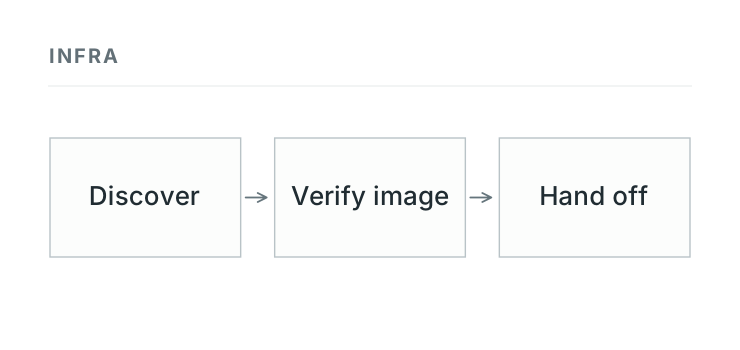
Infra discovers machines on a trusted LAN, maintains business address declarations and delivers complete application images. Bootstrap verifies the content and prepares a read-only root and networking, then grants execution once per boot. The application supplies its own evidence of readiness.
Storage and observability
Yaostore
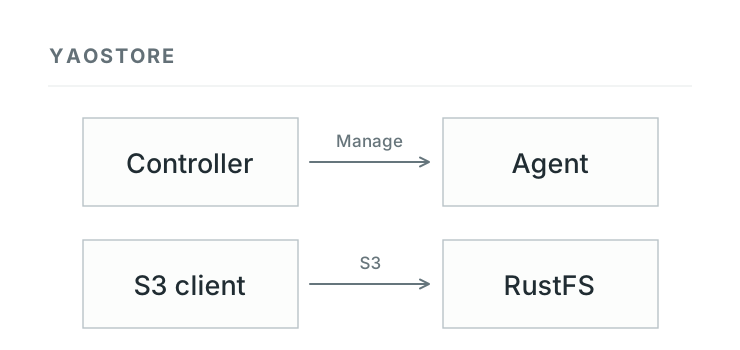
Yaostore manages disk custody, node processes and storage-pool changes around RustFS. Object requests go directly to the native service. Its management paths distinguish new-disk initialization, adoption of existing members and the independent observation needed after a native administrative submission.
Models and applications
YaoDel
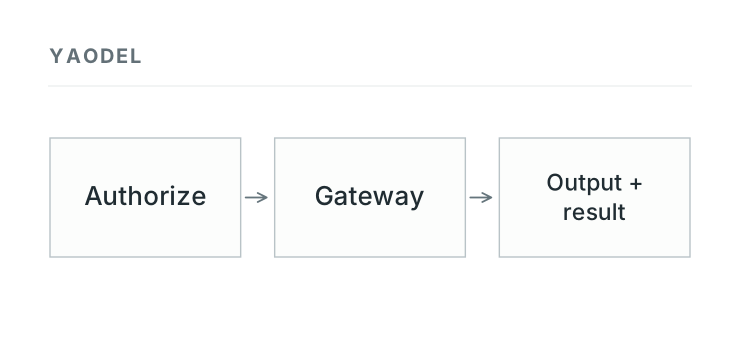
YaoDel gives independent applications shared access to model providers. It streams responses and returns final usage to the originating application. Applications retain identity, catalog and pricing decisions, while the gateway selects execution accounts and maintains durable result delivery.
Research infrastructure
Grounded in real machines.
Compute, storage and networks are the physical foundation of our research. Hardware, connections and measurement conditions describe the environment used for operation and verification.
Production node · per-host configuration
The Agent compute host
UEFI network boot loads the runtime into memory while working data remains on the local U.2 drive. The runtime and persistent data have distinct lifecycles.

A network of distinct responsibilities.
The management node provides the gateway and infrastructure services. ConnectX-5 links the application host to the fiber core. Xeon servers host the database and object storage; Agent hosts and server management interfaces join through an access switch.

Measured observations · October 2026
Measurements with their context.
These observations come from a separate Yaoshi development host: Ryzen 9 9950X, DDR5 and a 4 TB NVMe data drive. They describe local operations under specific conditions, rather than end-to-end service performance on the production host above.

Conditions and original intervals
Each operation was sampled three times in sequence with caches retained. VM measurements on 24 October 2026 used Cloud Hypervisor 53.0 with a minimal direct-boot guest, two vCPUs and 128 MiB of memory, producing a 14.234–17.382 ms range. The clock ends at hypervisor Running; guest and application readiness are separate observations. SFTP measurements on 30 October 2026 uploaded eight 4 KiB files over an authenticated loopback SSH session. One batch call took 3.025–3.420 ms of wall time; the individual transfer times from separate calls summed to 17.40–17.69 ms. That sum is not a single-file latency. Compilation, preparation of immutable inputs and independent integrity checks were outside the clocks.
Source: Yaoshi development host hardware and performance report, updated 30 October 2026.
Engineering practice
Give outcomes their evidence.
Define the result through the task
Begin with what the user needs to accomplish, then select interfaces and runtime behavior. Saved configuration, a started process and a completed business task each need their own evidence.
Keep responsibility with the resource
Files, processes, connections and transactions have explicit owners. A timeout or disconnect preserves the real state and a way to investigate it.
Explain what a measurement means
Retain workload, platform, timing boundaries and sampling conditions with every number. Design requirements, functional verification and measurements provide distinct, reviewable evidence.
Engineering notes
The reasoning behind the design.
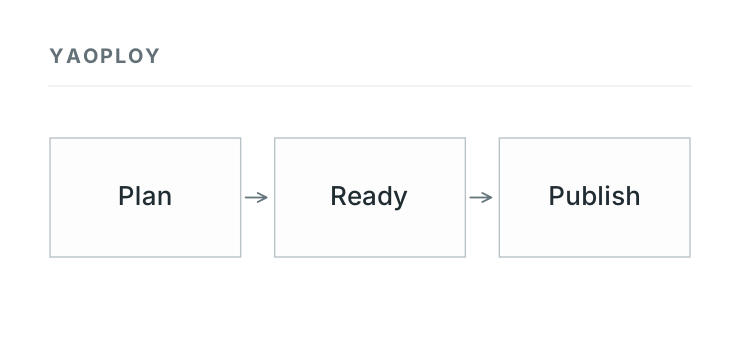
Deployment and readiness
The application started. Is it ready for requests?
A saved declaration, a live process, a readiness signal and a published route complete at different times. Follow Yaoploy into Yaogress to establish when a replica can serve a request.
Models and persistence
Confirm content and charges after a disconnect
Display, history, gateway usage and the ledger are four different facts. Query them against the original request to establish what was saved, whether the result was delivered and whether a charge was posted.
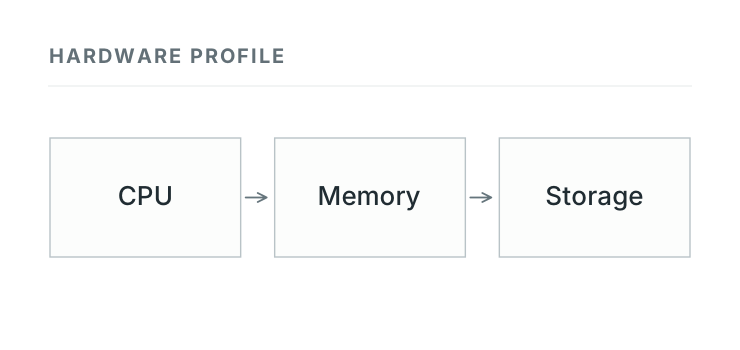
Hardware and measurement
What can a set of measurements establish?
Hardware configuration describes resources, runtime observations describe a moment, and performance samples time a particular task. Retaining subjects, clock boundaries and comparison premises makes an engineering conclusion reviewable.